September 11 and Afghanistan
Mohammad Yasin Samim

Translated from Persian/Dari Version
Twenty-five years have passed since the September 11, 2001 attacks. In the United States, 9/11 is primarily remembered as a national tragedy and a turning point in the global fight against terrorism. For Afghanistan, however, September 11 has a different meaning.
The attacks took place thousands of kilometers away, but they fundamentally changed Afghanistan’s political, social, and economic direction for more than two decades. They led to the removal of the Taliban from power, brought international forces to Afghanistan, and created the conditions for a new and relatively democratic political system. They also opened new opportunities in education, media, civil society, and women’s participation in public life. Twenty years later, this period ended with the withdrawal of foreign forces, the collapse of the Islamic Republic, and the Taliban’s return to power.
In this sense, Afghans experienced the consequences of September 11 not for a single day, but for more than two decades.
Twenty-five years later, perhaps the most important question for an Afghan is no longer simply what happened in New York and Washington on the morning of September 11, or who ultimately won or lost the war that followed. A more important question is:
What did September 11, and the developments that followed it, mean for Afghanistan and its people?
There is no simple answer.
Between 2001 and 2021, Afghanistan experienced a major expansion of education and higher education, private media, civil society, elections, citizenship rights, and women’s participation in public life. At the same time, the war continued in a different form. Corruption and patronage networks expanded, while the political system remained heavily dependent on foreign financial and military support until its final days.
Eventually, the same political system that had emerged in the aftermath of September 11 collapsed dramatically, and the Taliban returned to Kabul twenty years after they had been removed from power.
This raises another important question: Has Afghanistan really returned to where it was in 2001?
Afghanistan Before September 11
For Afghanistan, this story did not begin on September 11.
By 2001, Afghans had already experienced more than two decades of war, foreign intervention, internal conflict, and regional competition. The war against the Soviet Union during the 1980s brought not only Afghan mujahideen into the conflict, but also foreign fighters and transnational Islamist networks from neighboring countries and the wider Muslim and Arab world.
Some of these networks later contributed to the emergence of al-Qaeda. After Osama bin Laden returned to Afghanistan in 1996 and Taliban control expanded, Afghanistan became al-Qaeda’s most important safe haven.
The relationship between the Taliban and al-Qaeda was not simply one between a “host” and a “guest.” The two organizations did not have exactly the same objectives. The Taliban were primarily focused on controlling Afghanistan and establishing their preferred political and religious system, while al-Qaeda pursued a transnational jihadist agenda. Nevertheless, close political, military, and ideological ties developed between them.
According to the 9/11 Commission Report, Afghanistan provided al-Qaeda with a safe environment where it could train fighters, establish connections with other extremist networks, and plan terrorist operations. U.S. intelligence estimates cited in the report suggest that between 10,000 and 20,000 fighters trained or spent time in camps associated with bin Laden in Afghanistan between 1996 and September 2001.
Two days before the September 11 attacks, Ahmad Shah Masoud, the main commander of the anti-Taliban United Front, was assassinated in Khwaja Bahauddin, Takhar, by two Moroccan Arab attackers posing as journalists and documentary filmmakers. His assassination demonstrated how closely Afghanistan’s internal conflict had become connected to transnational jihadist networks.
Afghanistan, therefore, was already part of the international terrorism problem before September 11. What September 11 changed was the scale and intensity of the international response.
From New York to Kabul
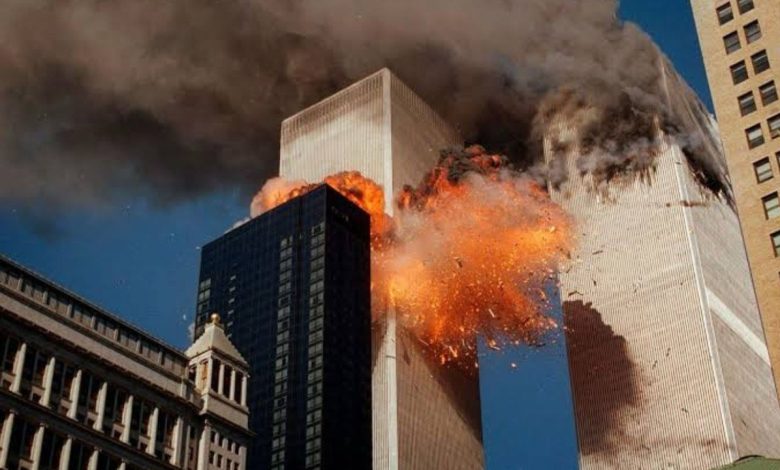
On September 11, 2001, 19 al-Qaeda members hijacked four passenger aircraft. Two were flown into the World Trade Center towers in New York, another struck the Pentagon, the headquarters of the U.S. Department of Defense, and the fourth crashed in Pennsylvania.
Nearly 3,000 people were killed.
Following the attacks, al-Qaeda became one of the most serious national security threats facing the United States. Washington demanded that the Taliban hand over Osama bin Laden and other al-Qaeda leaders and end the network’s activities in Afghanistan.
On October 7, 2001, the United States and its allies began military operations in Afghanistan.
Afghan United Front forces, supported by U.S. air power and special forces, advanced rapidly. Mazar-e-Sharif fell on November 9, and four days later the Taliban left Kabul. By early December, almost all major Afghan cities were outside Taliban control.
The Taliban’s first emirate had collapsed within weeks.
But the international mission did not end with destroying al-Qaeda camps and removing the Taliban. What began as a counterterrorism operation gradually became a much larger and longer project of state-building in Afghanistan.
That decision shaped the next twenty years.
From the Emirate to the Republic
One of the most significant consequences of September 11 for Afghanistan was the transformation of the country’s political system, with the involvement of both Afghan and international actors.
Afghanistan moved from an isolated Taliban emirate to an internationally supported constitutional republic. A new constitution was adopted. Presidential and parliamentary elections were held. Parliament, ministries, judicial institutions, security forces, and independent commissions were created or rebuilt.
Ideas such as elections, fundamental rights, political representation, freedom of expression, and government accountability became part of Afghanistan’s public discourse.
The Republic, of course, never became a fully functioning democratic system. Elections were repeatedly disputed and accompanied by allegations of fraud. Political power remained highly centralized in Kabul, particularly in the presidency. Personal, ethnic, and political networks often had greater influence over decision-making than formal institutions.
Nevertheless, an important change had taken place.
For millions of Afghans, at least under the law, the state was no longer simply an authority that citizens were expected to obey. Citizens also had rights. They could criticize those in power and publicly express their demands.
The growth of the media was one of the clearest examples of this transformation. Hundreds of television stations, radio stations, newspapers, and online media outlets emerged. Journalists questioned political leaders, from presidents and ministers to governors, district officials, and military commanders.
Corruption, war, women’s rights, ethnicity, politics, and government performance became subjects of public debate.
Civil society also expanded. Thousands of young Afghans became involved in human rights, education, elections, women’s rights, local development, and government accountability.
This transformation was not simply about the creation of organizations supported by foreign aid. At the societal level, a new generation emerged with greater public awareness and different expectations of government, politics, and citizenship.
Women and Human Rights
Perhaps no area demonstrated the changes after 2001 more clearly than education and women’s participation in society.
Millions of children entered school. Girls who had effectively been excluded from secondary education during the Taliban’s first rule returned to schools, private educational institutions, and universities.
A generation of Afghan women entered public life as teachers, doctors, journalists, defence lawyers, prosecutors, government employees, members of parliament, entrepreneurs, and civil society activists.
These gains were not equal across Afghanistan. The gap between cities and rural areas remained significant. Insecurity prevented many families from accessing education and public services. Violence against women continued, and equality guaranteed under the law was not always reflected in everyday life.
Yet the direction of change was clear.
For a generation of Afghan girls, education, employment, and participation in society were no longer simply aspirations. They became part of their lived experience.
The importance of this experience becomes even clearer when compared with the situation after the Taliban returned to power in 2021.
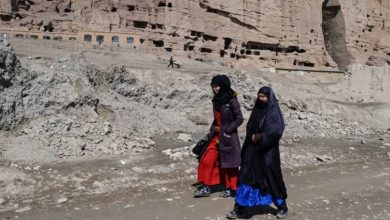
Since then, many of these spaces have again been restricted. The Taliban have banned girls and women from secondary and higher education and imposed extensive restrictions on their employment, movement, and participation in public life. Human rights reports have also documented increasing restrictions and controls on the media, activists, and critics of the Taliban authorities.
The difference between the two periods, therefore, is not simply about which group controls Kabul. It reflects two very different understandings of the relationship between the state and its citizens, particularly the place of women in society.
Weak Institutions
Beneath these visible changes, however, a fundamental problem was growing. The Afghan state, particularly its defence and security sectors, had become deeply dependent on foreign assistance.
The U.S. Special Inspector General for Afghanistan Reconstruction (SIGAR) repeatedly raised concerns about corruption, weak institutions, unrealistic policies, dependence on foreign assistance, and the lack of sustainability of many programs.
Over twenty years, the United States allocated approximately $145 billion for Afghanistan’s reconstruction. Ministries, security forces, development projects, and administrative systems expanded significantly. Yet many of them could not function independently without foreign funding, technical expertise, and political support.
This revealed one of the central contradictions of the Republic. Afghanistan perhaps had more formal state institutions than at any previous point in its recent history, but many of those institutions had not developed the political, financial, and social foundations necessary to stand on their own. Corruption and patronage also damaged public trust. Political positions and state resources were often distributed through networks of influence.
The international community promoted democracy, the rule of law, and human rights, while at the same time, for security and political reasons, it cooperated with individuals and networks whose practices sometimes contradicted the principles of good governance.
The state also remained highly centralized. Much of the country’s political authority was concentrated in Kabul and the presidency, while many local communities had limited influence over decisions that directly affected their lives. The problem, therefore, was not simply a lack of money or public institutions.
The deeper question was whether these institutions had become sufficiently legitimate, accountable, sustainable, and rooted in Afghan society to survive when foreign support declined. In 2021, Afghanistan received a painful answer to that question.
Cost of the War for Afghans
While new institutions were being built, the war also expanded.
The Taliban gradually rebuilt their forces with support and sanctuary in the region. The insurgency expanded, suicide attacks increased, and thousands of civilians were killed or injured in attacks, bombings, and fighting.
At the same time, operations by Afghan and international forces—including airstrikes and night raids—also caused civilian casualties. Annual reports by the United Nations Assistance Mission in Afghanistan (UNAMA) documented civilian casualties caused by different parties to the conflict throughout the war.
For an Afghan family, the strategic objectives of major powers often mattered far less than the immediate reality of war: a family member could be killed, a home destroyed, or an entire family forced to leave its community.
A war that had begun with the objective of preventing Afghanistan from again becoming a safe haven for international terrorism became a twenty-year conflict.
The September 11 attacks had taken place on American soil, but much of the war that followed was fought in Afghanistan, in different forms, and Afghans paid a heavy human price.
Negotiations Without Afghans
By 2020, the United States was increasingly determined to end its longest war.
The Doha Agreement was signed on February 29, 2020, between representatives of the United States and the Taliban. The agreement established a process for the withdrawal of foreign forces in return for commitments from the Taliban, including preventing Afghan territory from being used to threaten the United States and its allies.
For Afghans, however, Doha exposed another deep contradiction of the post-2001 political order.
For nearly twenty years, the international community had invested in building an Afghan state based on national sovereignty, a constitution, and political legitimacy. Yet when negotiations began over ending the war and withdrawing foreign forces, the Islamic Republic of Afghanistan was not a principal party to the negotiations between the United States and the Taliban.
This sent a powerful political message: one of the most important decisions about Afghanistan’s future was being negotiated primarily between a foreign power and an armed group.
SIGAR later identified the exclusion of the Afghan government from U.S.-Taliban negotiations as one of the factors that weakened the Republic. It also identified excessive centralization of power, corruption, a crisis of legitimacy, institutional weaknesses, and the Afghan government’s lack of preparation for an actual U.S. withdrawal among the factors contributing to the collapse.
The Afghanistan Analysts Network also observed after the fall of Kabul that while the United States was preparing for peace and a rapid withdrawal, the Taliban were preparing for war and the possibility of military victory.
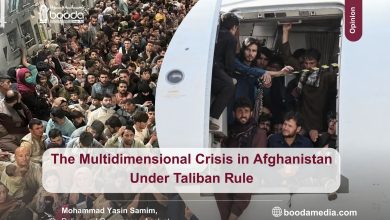
The consequences became clear in the summer of 2021. Provinces and districts fell one after another. The security forces disintegrated, and on August 15 the Taliban entered Kabul. A republic built over twenty years with extensive international support collapsed within weeks.
Same Approach, Different Society
At first glance, Afghanistan’s post-September 11 story appears to have come full circle.
The Taliban controlled most of Afghanistan in 2001. They were removed from power through U.S. military intervention and the support of Afghan allies. A new political system was then established at enormous human and financial cost.
Twenty years later, foreign forces left, the Republic collapsed, and the Taliban returned to power. But saying that Afghanistan has simply returned to where it was in 2001 ignores an important part of the story.
The political system has returned to Taliban rule, but Afghan society is no longer the society of 2001. The Taliban now govern a population that experienced profound social change during the previous twenty years, even though many of the gains of that period have now been restricted or lost. Millions of Afghans received an education. Universities expanded. A new generation of Afghan women experienced education, employment, and participation in public institutions and society.
Thousands of journalists experienced working in a relatively open media environment. Civil society activists learned how to organize, advocate, and engage publicly. Millions of citizens participated in elections and, despite the many failures of the system, became familiar with ideas such as justice, citizenship rights, constitutional government, and government accountability.
Many of these spaces have now been severely restricted. Women and girls face extensive limitations on education, employment, and participation in public life. The media environment has narrowed, while many members of Afghanistan’s educated generation have left the country or are seeking ways to leave.
But twenty years of experience cannot simply be erased from the collective memory of Afghan society by a change of government. Perhaps one of the most important realities of Afghanistan today is that the structure of political power has changed, but the experiences and expectations of millions of Afghans have not fully returned to those of the past. Even under an authoritarian system, these experiences continue to create space for resistance, demands for rights, and expectations of future change.
September 11 Through Afghan Eyes
From Washington’s perspective, some of the original objectives of the post-9/11 war were achieved. The Taliban’s first government was removed. Al-Qaeda’s central infrastructure in Afghanistan was disrupted. Many of its leaders were killed or captured, and Osama bin Laden was eventually killed in Pakistan.
But the picture looks far more complicated when viewed from Kabul, Bamyan, Herat, Kandahar, Mazar-e-Sharif, or Daikundi. For Afghans, September 11 meant the fall of one political system and the creation of another. It meant the arrival of foreign forces and billions of dollars in international assistance. It brought a constitution, elections, schools, universities, media, civil society, and new opportunities for women.
But it also meant twenty years of war. Suicide attacks, bombings, airstrikes, night raids, migration, displacement, and the deaths of thousands of civilians were also part of this experience.
Brown University’s Costs of War project estimates the financial cost of the U.S. war in Afghanistan and Pakistan at approximately $2.3 trillion and estimates around 243,000 direct deaths related to the conflict.
For Afghanistan, however, the cost of this period cannot be measured only in dollars or casualty statistics. It must also be understood through lives lost, forced migration, missed opportunities, collapsed institutions, and generations of Afghans who have repeatedly been forced to rebuild their lives.
What Can be Learned from September 11?
Perhaps the main question today is not whether the United States won or lost the war in Afghanistan, or how the Taliban eventually prevailed.
A more difficult and painful question is why twenty years of military involvement by more than forty foreign countries, hundreds of billions of dollars in international investment, and enormous sacrifices by the Afghan people failed to create a political system capable of surviving without foreign support and protecting its social, legal, and civic achievements.
Part of the answer may lie in how Western countries viewed Afghanistan: For a long time, Afghanistan was largely viewed through the lens of counterterrorism and the national interests of individual countries. Yet extremism in Afghanistan was never simply a collection of armed fighters that could be eliminated through airstrikes, special operations, or the killing of military commanders.
It was connected to social and cultural structures, weak government service delivery, corruption, external safe havens for radical groups, regional rivalries, the war and drug economies, and the absence of a sustainable political agreement among Afghanistan’s ethnic and political groups.
Military power can quickly overthrow a government. It can temporarily destroy terrorist camps and remove commanders from the battlefield.
Foreign assistance can build roads, schools, ministries, and security forces, but without genuine national commitment and inclusive participation, neither military power nor foreign assistance alone can create legitimate government, accountable institutions, or a political system capable of protecting citizens’ fundamental rights and enabling broad public participation in democratic development.
This may be one of the most important lessons of September 11 for Afghanistan. Twenty-five years later, the Taliban again rule Afghanistan. Many of the political and civil freedoms that existed during the Republic have been severely restricted. Structural and political discrimination against ethnic and religious minorities has increased, while women and girls have lost much of the space they had gained in education, employment, and public life.
Even so, Afghanistan today is not the Afghanistan of September 2001. The political system created after September 11 has disappeared, but the experiences, awareness, and social expectations that developed during those twenty years have not disappeared with it. Perhaps this is the most complicated legacy of September 11 for Afghanistan:
Twenty years were enough to profoundly change the ideas, attitudes, and expectations of Afghan society toward politics and governance. But they were not enough to build a political system strong enough to protect those changes. That remains an unfinished task for Afghanistan’s future.
References:
- The 9/11 Commission Report, National Commission on Terrorist Attacks Upon the United States (2004).
- Why the Afghan Government Collapsed, Special Inspector General for Afghanistan Reconstruction (SIGAR), 2022.
- What We Need to Learn: Lessons from Twenty Years of Afghanistan Reconstruction, SIGAR, 2021.
- Protection of Civilians in Armed Conflict, United Nations Assistance Mission in Afghanistan (UNAMA).
- The Taliban’s Rise to Power: As the US Prepared for Peace, the Prepared for War, Kate Clark, Afghanistan Analysts Network, 2021.
- Human and Budgetary Costs of the U.S. War in Afghanistan, Brown University, Costs of War Project.
- World Report 2026: Afghanistan, Human