Food for Thought

Introduction
Since the Taliban regained control of Afghanistan in August 2021, the country has faced a profound and interconnected crisis across political, human rights, humanitarian, and socioeconomic domains.
Governance remains highly centralized, ideologically driven, and dominated by a narrow Pashtun elite, resulting in the systematic exclusion of women, ethnic minorities, and non-dominant voices.
Key issues include severe restrictions on women’s rights-described by UN experts as equivalent to “gender apartheid”, economic contraction, widespread food insecurity, and ongoing persecution of minorities.
This overview draws on the latest reports from Human Rights Watch (HRW), UN agencies (including the Special Rapporteur on Afghanistan), Amnesty International, Reporters Without Borders (RSF), UNESCO, UNICEF, and the World Food Programme (WFP) to provide an accurate, up-to-date assessment.
1. Institutionalized Gender Apartheid
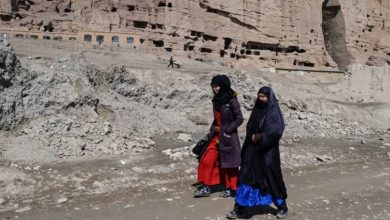
The Taliban have intensified systematic oppression of women and girls, making Afghanistan the site of one of the world’s most severe human rights crises. UN Special Rapporteur Richard Bennett and Human Rights Watch have characterized these policies as “gender apartheid,” involving state-enforced discrimination that erases women from public life.
A dozen decrees issued to date, 179 exclusively focus on women and prohibit them from secondary and higher education, employment opportunities, unaccompanied travel, and even speaking publicly or accessing certain healthcare without a male guardian. Corporal punishments, including public floggings, arbitrary detentions, and enforced disappearances, target women, human rights defenders, and critics.
These restrictions have worsened mental health crises, maternal mortality, and gender-based violence, and religious freedom has also declined for minorities, including the Shia Hazaras, Ismailies, Sikhs, Hindus, and others, with increasing reports of harassment, attacks and threats.
2. Education Crisis
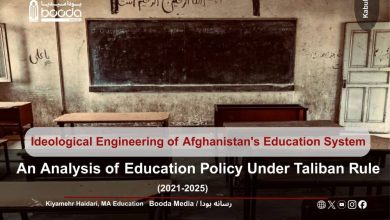
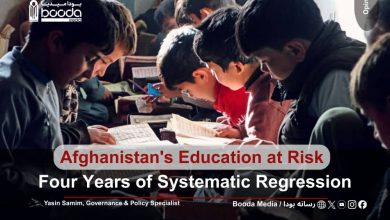
Afghanistan remains the only country prohibiting girls’ secondary and higher education, with the ban now exceeding 1,500 days as of early 2026. This affects millions of girls: over 1 million are barred from secondary school and tens of thousands from university since late 2022.
Boys’ education has deteriorated due to curriculum changes emphasizing religious instruction, dismissal of qualified (especially female) teachers, and poor infrastructure. UNESCO warns of long-term threats to literacy, skills development, and gender equality, with billions of dollars in potential economic losses resulting from lost human capital. Despite widespread Afghan support for girls’ education (as high as 92% according to UN Women surveys), no reopening has occurred.
3. Humanitarian and Public Health Crisis
Afghanistan faces acute humanitarian challenges, with over 17 million people experiencing high levels of food insecurity heading into winter 2025–2026, according to WFP reports. Malnutrition affects millions of children, exacerbated by economic collapse, climate shocks, and restricted aid delivery.
Public health infrastructure has declined sharply. Maternal mortality remains among the world’s highest, estimated at 620–638 deaths per 100,000 live births, with stagnation or potential increases due to bans on female healthcare workers and women’s restricted access to services. Increasing health facility closures and shortages disproportionately impact rural and minority areas.
4. Land Seizure and Forced Displacement
Non-Pashtun and marginalized ethnic groups, particularly the Hazara community, face systematic discrimination, forced displacement, and land seizures. Taliban policies often justify land grabs as “state recovery,” but their decisions disproportionately target non-Pashtun communities such as the Hazaras, Tajiks and Uzbeks, reviving historical legal and social disputes.
Reports document ongoing evictions, biased dispute resolutions favoring Pashtun nomads (Kuchis) or Taliban loyalists, and redistribution of land to supporters across the country. Minority Rights Group and independent analysts describe these as systematic persecutions, leading to internal displacement, poverty, and demographic shifts. Furthermore, there are documented studies that show how court systems under the Taliban are biased against ethnic and religious minorities of the country.
5.Media Freedom and Broader Repression
Media freedom has collapsed under Taliban rule. Afghanistan ranked 175th out of 180 in RSF’s 2025 World Press Freedom Index, with widespread media outlet closures, journalist detentions, torture, and censorship. Reports confirm that over half of media outlets have shut down since 2021, and female journalists have faced serious unemployment and restrictions.
Repression includes arbitrary arrests of activists, former officials, and critics, alongside corporal punishments and restrictions on freedom of expression.
6. Legitimacy and Discrimination
The Taliban’s rule lacks public legitimacy, stemming from their 2021 takeover after the U.S. withdrawal and the Doha Agreement. They oppose elections, power-sharing, and inclusive governance, relying solely on their interpretation of Sharia law.
Their governance is highly centralized and Pashtun-dominated (with over 80%), marked by nepotism and the exclusion of non-Pashtuns such as Tajiks, Hazaras, Uzbeks, and others. While most countries withhold official recognition, pragmatic engagement has increased in recent years: Russia was the first to officially recognize the Taliban government in July 2025. Other nations maintain de facto relations through embassies and granting aid programs, but global isolation continues due to human rights issues.
This ideological and ethnic-based system of governance has put discriminatory policies and actions into practice in public institutions across the country, at both national and provincial levels.
As a result, most ethnic groups, particularly the Hazaras, followers of the Ismaili faith, and Hindus and Sikhs, have been removed from all senior and mid-level government positions, and documented reports show that the Taliban’s human resources policies on hiring, promotion, and dismissal of public servants are carried out based on ethnicity, religion, and ideology.
References:
- Human Rights Watch. World Report 2025: Afghanistan. https://www.hrw.org/world-report/2025/country-chapters/afghanistan
- UN Human Rights Council. Reports of Special Rapporteur Richard Bennett (2025). https://www.ohchr.org/en/documents/country-reports/ahrc5880-report-special-rapporteur-situation-human-rights-afghanistan and subsequent reports.
- Reporters Without Borders. World Press Freedom Index 2025. https://rsf.org/en/index
- UNESCO. Reports on the Afghanistan education crisis (2025). https://www.unesco.org/en/articles/new-report-warns-afghanistans-education-crisis-threatens-future-entire-generation
- World Food Programme. Afghanistan food security updates (December 2025). https://www.wfp.org/news/latest-food-security-report-confirms-fears-deepening-hunger-crisis-afghanistan-winter-sets
- Minority Rights Group. Statement on Hazara persecution (2025). https://minorityrights.org/hazaras-2025/
- Bolaq Analysts Network. Reports on Hazaras under Taliban (2025). https://www.bolaq.org/2025/09/year-four-under-the-taliban-what-it-has-meant-for-afghanistans-hazaras/
- Amnesty International. Annual Report sections on Afghanistan (2025).
- UN Women. Survey on education support (2025). https://www.unwomen.org/en/news-stories/press-release/2025/08/four-years-after-taliban-takeover-afghans-overwhelmingly-back-girls-education
- International Institute for Strategic Studies. Analysis on Russia-Taliban recognition (2025). https://www.iiss.org/online-analysis/online-analysis/2025/08/will-russias-diplomatic-recognition-of-the-afghan-taliban-government-have-a-domino-effect/