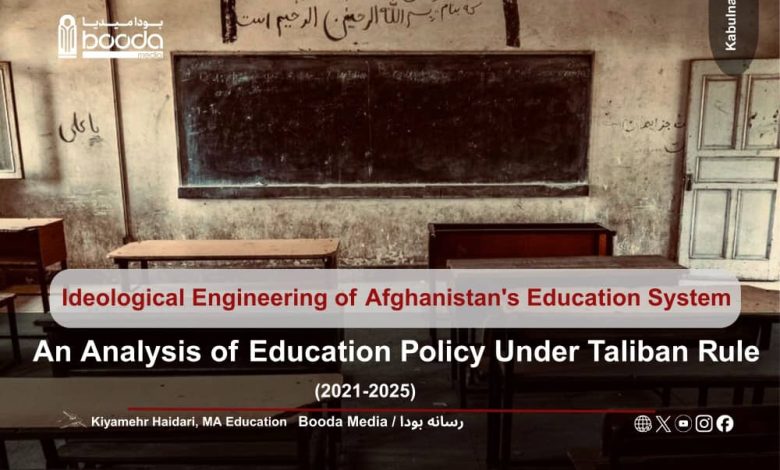
Ideological Engineering of Afghanistan Education System (2021–2025)
On the Occasion of the International Day of Education

About the Author:
Kiyamehr Haidari holds a Master’s degree in Educational Management and Higher Education Studies and has over 20 years of professional experience in education, teaching, and educational leadership.
Throughout his career, he has held diverse roles across various educational levels, encompassing teaching, administration, and capacity development. His key leadership positions include serving as Principal of Mehregan Private High School and Executive Director of the Academy of Arts and the Mehregan Film Festivals in Kabul, Afghanistan (2012–2020). He has also contributed significantly to teacher development by designing and delivering capacity-building programs for educators in private schools in Kabul.
Note: This article was originally developed and published in Farsi/Dari and translated into English.
Problem Statement
Education stands as one of the most fundamental human rights and a vital instrument for sustainable development. It plays a decisive role in shaping the individual and collective future of a society. International frameworks, including the Universal Declaration of Human Rights and the United Nations Sustainable Development Goals (particularly SDG 4), frame quality, inclusive, and equitable education not only as a fundamental human right but as an essential prerequisite for peace, stability, economic progress, and democratic participation (United Nations, 2015).
By proclaiming January 24 as the International Day of Education, the UN General Assembly symbolically and politically underscores education’s critical role in tackling global challenges, from poverty and inequality to extremism and instability (UN General Assembly, 2018).
While many nations use this day to celebrate advances and pursue reforms in their education systems, in Taliban-controlled Afghanistan, it has become a poignant reminder of the systematic denial of education to vast segments of the population, especially girls and women.
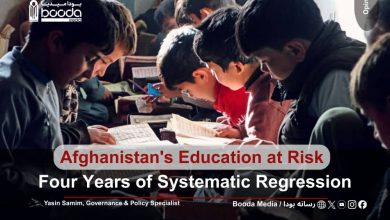
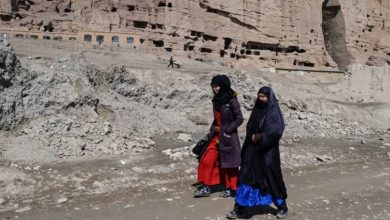
Since the Taliban’s takeover in August 2021, Afghanistan’s education system has plunged into one of its most profound crises. Through successive decrees, the Taliban first barred girls from secondary education and later banned women from universities, rendering Afghanistan the only country in the world to impose a nationwide, official prohibition on girls’ and women’s education (UNESCO, 2024).
UNICEF estimates that more than 2.2 million girls have been denied their right to education, a number projected to grow annually if the policy persists (UNICEF, 2025). The crisis extends beyond girls’ exclusion: the entire system, from curriculum quality and teacher capacity to university independence and academic freedom, faces steady erosion (SIGAR, 2023).
In tandem with access restrictions, the Taliban have pursued aggressive ideological engineering of the education system. This includes rewriting curricula, excising subjects such as social sciences and human rights, and promoting religious Madrassas as alternatives for formal schooling. These developments prompt core questions:
- How, and by what mechanisms, have the Taliban restricted and restructured Afghanistan’s education system?
- Why has education emerged as a primary battleground for the Taliban’s political and ideological struggle?
- What are the Taliban’s objectives in ideologizing education?
- What short- and long-term consequences will these policies hold for Afghanistan’s future?
The sections that follow address these questions, drawing on reliable reports, data, and sources from both national and international sources.
Theoretical Framework: Education, Power, and Ideology
Social science literature and critical education theory never treat education as a neutral, technical conduit for knowledge transfer. Rather, it is examined as one of the central arenas for exercising power, reproducing ideology, and structuring social order. Education defines what counts as “legitimate” knowledge, which narratives are sidelined, and which groups gain access to cultural, social, and symbolic capital. Far from merely reflecting power structures, education actively helps produce and sustain them.
Education and the Reproduction of Social Order: Bourdieu’s Perspective
Pierre Bourdieu’s theory of social reproduction shows that education systems in many societies do not mitigate inequality but naturalize and perpetuate it. Formal education reinforces the dominance of ruling classes by privileging their particular form of “cultural capital”, including language, speech patterns, cognitive habits, and cultural codes (Bourdieu and Passeron, 1977).
Schools and universities thus appear as neutral arbiters while actually legitimizing social and political inequalities. Central to Bourdieu’s framework is the concept of symbolic violence: the imposition of meanings and values without overt physical force. This process operates at education’s core, leading students to internalize the dominant order not as coercion but as the “natural order of things.” This lens is especially illuminating for authoritarian regimes, where education control fosters enduring social compliance without visible repression.
Education as an Ideological State Apparatus: Althusser
Louis Althusser’s concept of “Ideological State Apparatuses” positions education as a pivotal mechanism for reproducing power relations. In modern societies, schools have supplanted traditional institutions like the church as the chief transmitters of dominant ideology (Althusser, 1971).
Education thus conveys not only technical skills but also obedience, political identity, and the preferred social order. Students learn modes of thought, what to accept as natural, and which questions to avoid. Curriculum control, subject elimination, and value emphasis, therefore, constitute deliberate efforts at “internalizing ideology.” Althusser’s framework clarifies that the Taliban’s curriculum revisions and removal of social sciences, human rights, and critical inquiry form a coherent strategy to reproduce their desired ideological order.
Knowledge, Power, and Curriculum: Michael Apple’s Perspective
Prominent critical theorist Michael Apple analyzes what knowledge schools teach and why. He contends that curricula arise from political and ideological battles and are inherently non-neutral (Apple, 2019). Suppressing or watering down fields like critical studies, social history, or equality discussions carries as much ideological significance as adding explicit propaganda.
In authoritarian or conservative contexts, Apple observes, education funnels toward “official knowledge” that legitimizes the status quo and curtails social imagination and transformative potential. Education thereby shifts from nurturing informed, engaged citizens to producing compliant subjects.
Integrating Bourdieu, Althusser, and Apple reveals that in authoritarian settings, controlling education equates to shaping society’s future. It dictates who may speak authoritatively, what knowledge holds validity, and which social possibilities can even be envisioned. Restricting access, particularly for women and marginalized groups, and ideologizing content thus represent complementary facets of one overarching policy.
Through this lens, the Taliban education policies emerge as a systematic effort to suppress social consciousness, stifle critical thought, and entrench ideological hegemony, not solely by barring girls physically but by redefining education’s purpose and meaning. The Afghan education crisis is therefore not merely about access but a profound contest over knowledge, meaning, and power.
Methods of Restriction and Ideological Engineering by the Taliban
The Taliban deploy multiple strategies to restrict and ideologize the education system:
Systematic Deprivation of Girls and Women. The most visible policy bans girls from education beyond grade 6 and prohibits women from higher education. UNESCO labels this an “unprecedented and systematic violation of the right to education” (UNESCO, 2024). Human Rights Watch views the bans as structural efforts to exclude women from public life (Human Rights Watch, 2025).
Decline in Quality for Boys and the System Overall. Even boys with school access face sharply reduced quality due to teacher shortages, scarce resources, and an ideologically restrictive environment (UNESCO and UNICEF, 2025).
Curriculum Rewriting and Removal of “Undesirable” Subjects. Hundreds of titles have been revised or eliminated, excising human rights, gender equality, political philosophy, and social sciences. This severely curtails university academic freedom, transforming higher education into a conduit for Taliban ideological narratives (UNESCO, 2025).
Expansion of Religious Madrassas. Significant investment in madrassas serves as “ideological school-building” to cultivate loyalty to Taliban rule (Wilson Center, 2024).
Taliban Objectives in Ideologizing Education
Analyses of available sources distill the Taliban’s goals to: enforcing social control and suppressing critical thought, ideologically legitimizing their authority, producing obedient rather than active citizens, and phasing out alternative discourses (human rights, equality, political participation).
This ideologization forms part of a larger project of social domination, power consolidation, and future political management. Chief among objectives is curbing critical thinking, which is the potential fuel for questioning, demanding rights, and civil resistance by limiting access and excising analytical content. A second aim is to portray Taliban rule as a natural, divinely ordained, unquestionable order through selective religious and historical emphasis. Third, policies seek to reproduce passive, compliant individuals rather than engaged citizens.
Finally, eliminating rival discourses narrows intellectual horizons and erases visions of alternative social arrangements, patterns typical of authoritarian regimes that instrumentalize education for regime perpetuation.
Consequences of Taliban Education Policies for Afghanistan’s Future
These policies generate profound, multi-dimensional, long-term impacts across economic, social, health, and political spheres.
- The most foundational is the erosion of human capital and deepened economic stagnation. World Bank projections indicate that excluding women from education and employment could substantially diminish long-term GDP and entrench structural poverty (World Bank, 2023). Denying half the population education deprives the economy of half its productive potential.
- A second grave outcome is a looming health and social services crisis. Continued exclusion of girls will produce acute shortages of female health workers with lethal consequences in a context of cultural and mobility barriers for women seeking care (UNESCO, 2025). Maternal and child mortality rates stand to rise sharply.
- Third, these policies institutionalize and perpetuate gender inequality and social fragmentation. Educational discrimination becomes structural, transmitting inequality across generations and barring women from meaningful social and political participation (Human Rights Watch, 2025).
- Fourth, critical thinking is systematically diminished. Excising social sciences, philosophy, analytical history, and legal studies converts education from an instrument of inquiry into a tool for strengthening the status quo, leaving future generations less equipped to question official narratives and more susceptible to extremism and manipulation.
- Fifth, ideological education fosters one-dimensional thinking and intellectual homogenization. Relentless reproduction of a singular religious, historical, and social narrative cultivates non-pluralistic mindsets, reinforcing Bourdieu’s “symbolic violence” by naturalizing the ruling order (Bourdieu and Passeron, 1977).
- Sixth, Afghanistan’s rich cultural and ethnic diversity is undermined. By privileging one ideological-cultural narrative, policies marginalize other linguistic, ethnic, and cultural identities, potentially intensifying divisions, mistrust, and ethnic dominance over time.
Additional consequences include the substitution of authentic learning with performative education (credentialism, rote learning, propaganda over skill-building); erosion of social capital and civic tolerance; and accelerated brain drain as restrictions, academic suppression, and bleak prospects drive away talent, severely hampering future institutional recovery and development.
Collectively, these policies imperil not only the current generation but Afghanistan’s prospects for sustainable development in the decades ahead.
Conclusion
In contemporary Afghanistan, International Day of Education serves as a stark reminder of a deep humanitarian and structural crisis. Taliban policies have transformed education into a primary arena of contestation over power, ideology, and the nation’s future. Persisting on this trajectory will leave Afghanistan with a generation stripped of knowledge, skills, and hope, showing national reconstruction virtually impossible.
The crisis is neither temporary nor confined to formal schooling; it forms part of a profound structural and ideological shift reshaping the country’s social, economic, and political trajectory. The Taliban have repurposed education from a universal right and empowerment tool into an instrument of social control, ideological reproduction, and intellectual uniformity.
From human-capital collapse and economic stagnation to entrenched gender inequality, diminished cultural pluralism, eroded critical thought, and mass elite emigration, Afghanistan confronts a blocked future: one where institutional renewal, peaceful coexistence, and sustainable progress face severe constraints. In this context, education ceases to drive development and instead perpetuates crisis.
Restoring an inclusive, equitable, high-quality, and independent education system is therefore not merely a human rights imperative but an existential necessity for social survival, national unity, and economic recovery. Without securing education for all, especially girls and women, any prospect of lasting stability, peace, and development in Afghanistan will remain fragile and untenable.
Sources used in this article:
Althusser, L. (1971). Ideology and ideological state apparatuses. In Lenin and philosophy and other essays. Monthly Review Press. https://www.marxists.org/reference/archive/althusser/1970/ideology.htm
Apple, M. W. (2019). Ideology and curriculum (4th ed.). Routledge. https://doi.org/10.4324/9780203487563
Banks, J. A. (2008). An introduction to multicultural education (4th ed.). Pearson. https://ucarecdn.com/d82827b2-9e39-40fe-a717-a1aca81ce4a9/
Bourdieu, P., & Passeron, J.-C. (1977). Reproduction in education, society and culture. Sage. https://monoskop.org/images/8/82/Bourdieu_Pierre_Passeron_Jean_Claude_Reproduction_in_Education_Society_and_Culture_1990.pdf
Human Rights Watch. (2025). World report 2025: Afghanistan. https://www.hrw.org/world-report/2025/country-chapters/afghanistan
SIGAR. (2023). Afghanistan education: Challenges under Taliban rule. Special Inspector General for Afghanistan Reconstruction. https://www.ecoi.net/en/file/local/2099571/SIGAR-24-01-IP.pdf
UNESCO. (2024). Afghanistan: Four years, 2.2 million girls still banned from school. https://www.unesco.org/en/articles/afghanistan-four-years-22-million-girls-still-banned-school
UNESCO. (2025). Afghanistan education situation report 2025. UNESCO & UNICEF. https://articles.unesco.org/sites/default/files/medias/fichiers/2025/10/Afghanistan%20Education%20Situation%20Report%202025.pdf
UNICEF & UNESCO. (2025). Education under strain in Afghanistan. United Nations.
UNICEF. (2025). New school year starts in Afghanistan with millions of girls still denied education. https://www.unicef.org/press-releases/new-school-year-starts-afghanistan-almost-400000-more-girls-deprived-their-right
United Nations General Assembly. (2018). Resolution A/RES/73/25: International Day of Education. https://docs.un.org/en/a/res/73/25
United Nations. (2015). Transforming our world: The 2030 agenda for sustainable development. https://sdgs.un.org/2030agenda
Wilson Center. (2024). Madrasafication of Afghanistan and its implications. https://www.wilsoncenter.org/blog-post/factors-driving-taliban-madrasafication-afghanistan-their-implications
World Bank. (2023). Afghanistan development update. World Bank Group. https://thedocs.worldbank.org/en/doc/210d5f24dc33a3460beff3447fceadcf-0310012023/original/Afghanistan-Development-Update-20231003-final.pdf
Footnotes (explanation of terms and how they are used)
[1] The term “engineering” in the title and throughout this analysis refers to deliberate, planned, goal-directed interventions by political or ideological power to shape the structure, content, function, and outcomes of a system (here, education) so that its results align with the rulers’ predetermined aims. It denotes organized control over curricula, pedagogy, teacher selection, and definitions of legitimate knowledge aimed at molding mindsets, identities, and behaviors across generations. Engineering thus foregrounds the nexus of power, knowledge, and ideology, revealing how education can serve to reproduce regimes.
[2]. Bourdieu and Passeron
[3] In Bourdieu’s theory, the “natural order of things” describes a state where the dominant social order is so deeply internalized that it appears self-evident and beyond question. He terms this “doxa” the taken-for-granted social world, where power relations and inequalities remain invisible because the existing order is perceived as natural and immutable, severely constraining the imagination of alternatives.
[4] Ideological State Apparatuses
[6] In Althusser’s framework, “internalizing ideology” refers to the unconscious absorption of dominant values, norms, and beliefs as though they were natural aspects of one’s identity. Ideology functions through apparatuses (education, religion, media, family) that “interpellate” individuals as subjects, leading them to voluntarily recognize and accept their roles within the existing order, without perceiving coercion. Ideology is most powerful when it becomes part of self-consciousness, reproducing the dominant order as natural, legitimate, and inevitable.
[7] Michael Apple
[8] James A. Banks defines multicultural education as an approach that redesigns education systems to recognize and equitably represent cultural, ethnic, linguistic, and religious diversity, ensuring equal learning opportunities for all groups (Banks, 2008). Beyond knowledge transmission, it fosters mutual respect, tolerance, dialogue, and coexistence. Implementation in diverse societies (Canada, Australia, the United States, parts of Europe) has demonstrated reductions in discrimination, strengthened social cohesion, increased social capital, greater civic engagement, and mitigation of ethnic tensions, transforming education into a foundation for peaceful, stable pluralism.